







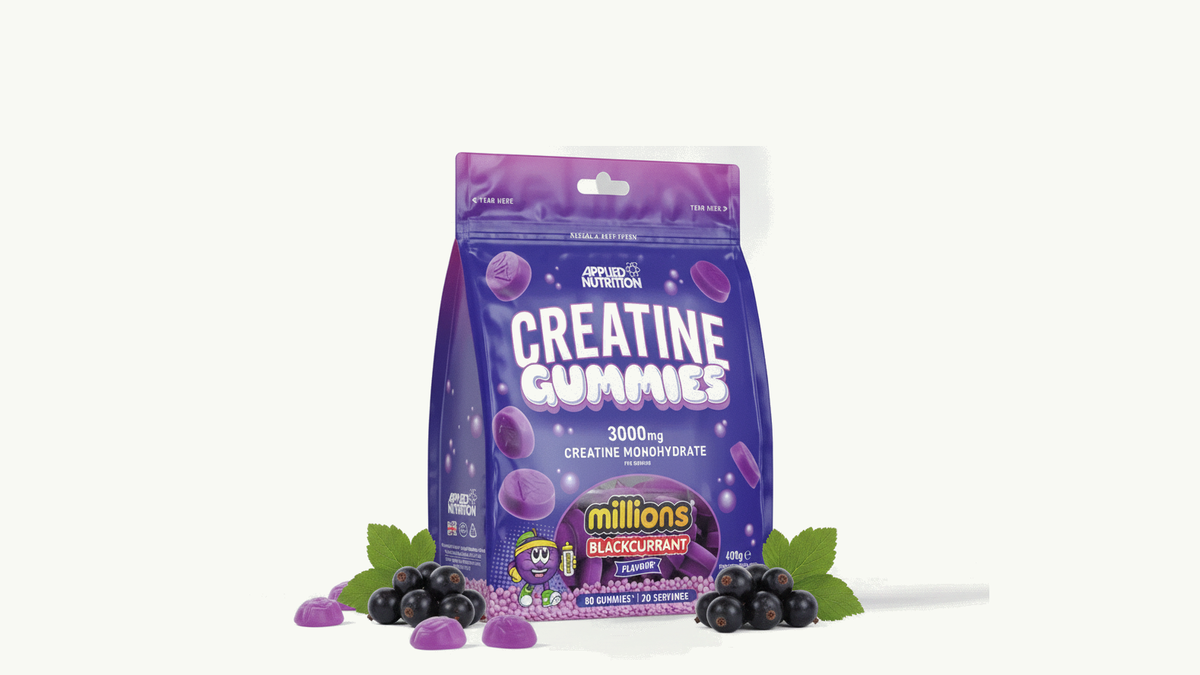
Creatine gummies are the latest proof that everything in supplement-land eventually gets a candy makeover. They look fun, taste great and promise the same as that boring tub of powder. The question isn't whether gummies are enjoyable, but whether they're the smart choice.
The short answer: powder is the more logical option for most people. Creatine monohydrate in powder form is the most extensively researched sports supplement, you can dose it precisely, and your cost per serving is significantly lower. Gummies only win on convenience and taste. The active ingredient? That's the same, as long as you get enough. And that's often where things go wrong.
What is the difference between creatine gummies and powder?
The form, not the active ingredient. Both contain creatine, usually monohydrate. You stir powder into water or your shake and dose it yourself, typically around 3 to 5 grams per day. Gummies are pre-dosed sweets of which you eat several per day to reach the same amount.
The difference lies in everything surrounding that. A gummy needs more than just creatine — it needs a candy base: gelling agents, sweeteners or sugars, flavourings. Powder is essentially one ingredient in a tub. That makes powder easier to assess and easier to dose precisely. What works best for you depends on what you can realistically stick to every day.
Do creatine gummies work?
Creatine works regardless of the form, as long as the daily dose is correct. The approved EFSA claim is clear: creatine increases physical performance during successive bursts of short-term, high-intensity exercise. That effect applies at a daily intake of 3 grams of creatine, and it builds up over weeks of consistent use.
That's exactly where gummies can trip you up: if you don't reach those 3 grams per day, you're missing the dosage to which the effect is tied. With powder, it's simple — one scoop and you're done. With gummies, you need to check the label and count. If you regularly skip days or eat too few, you've essentially bought expensive sweets.
How many gummies do you need for 3 grams per day?
That varies widely by brand, and that's precisely the point. The amount of creatine per gummy is often modest, meaning you need several per day to reach 3 grams. Always check the label: how much creatine per gummy, and how many gummies make up one daily serving.
Compare that to powder: one measuring scoop, done. No maths, no half-empty packets, no "was it three or four?". For something you do every single day for months on end, that simplicity isn't a detail — it's the whole point. The fewer steps between you and your daily dose, the more likely you are to keep it up.
What does it cost per serving?
Without quoting specific prices, the ratio is clear: per 3-gram serving, powder is considerably cheaper than gummies. With gummies, you're also paying for the candy format, the packaging and the marketing around it. With a tub of powder, you're essentially paying for the one thing that matters: the creatine itself.
Since creatine is a daily supplement, that difference adds up every month. If you're looking for the best deals on monohydrate, check out our comparison in goedkope creatine online kopen. There you'll see why a simple tub of powder has been the no-nonsense choice for years.
When are gummies actually useful?
When the barrier of powder is simply too high for you. Some people find powder impractical on the go, forget their shaker or are put off by the texture of creatine in water. If a gummy is the difference between taking it daily and quitting after two weeks, then the gummy is the better format for you.
That's not a scientific conclusion but a practical one: the best supplement is the one you actually take every single day. If you choose gummies, do so deliberately: check the creatine per gummy, work out whether you're hitting 3 grams per day, and take them just as consistently as you would a scoop of powder. And remember that every supplement is an addition to a varied diet, not a replacement.
What should you look for if you do choose gummies?
Four things: the amount of creatine per gummy, the number of gummies per daily serving, the form of creatine used, and what else is in them. That information is on the label, and the label is your guide. Sounds strict for a sweet, but you are buying it as a supplement.
- Creatine per daily serving: does the recommended number of gummies get you to 3 grams per day? If not, you're missing the dosage to which the EFSA claim is tied.
- Form: creatine monohydrate is the most researched variant. If a more exotic form appears on the label, ask yourself why.
- Sugars and sweeteners: a candy base needs them. Not a disaster, but worth knowing when you're eating several every day.
- Cost per serving: convert the pack into days. Only then do you get a fair comparison.
And as with any supplement: if you use medication, are pregnant or have health concerns, consult your GP first.
So which creatine should you choose?
For most athletes: creatine monohydrate in powder form. It's the standard in virtually all research, you dose it precisely and it's the most cost-effective per serving. If you want a little extra reassurance about purity, look for Creapure, the patented German monohydrate ingredient.
Loading isn't necessary by the way: around 3 grams daily is sufficient, and the effect builds up on its own over weeks. Want to know more about the differences between monohydrate, Creapure and other variants? Read welke creatine is het beste. And on the topic of timing, we can already tell you it matters less than the internet would have you believe — the details are in wanneer creatine innemen.
Frequently asked questions
Are creatine gummies just as effective as powder?
The creatine itself is equivalent; the difference lies in dosing and cost. Creatine increases physical performance during successive bursts of short-term, high-intensity exercise, at a daily intake of 3 grams. If you consistently hit that dose with gummies, it works. Powder just makes that easier and more affordable.
How much creatine should I take per day?
The EFSA claim applies at 3 grams of creatine per day; in sports practice, 3 to 5 grams is commonly used. Loading is not necessary. Follow the label of your product and take it daily, including rest days, as the effect builds up over weeks.
Why are gummies more expensive per serving?
You're paying for the candy format: production, gelling agents, flavourings and packaging. With powder, your money goes almost entirely towards the creatine itself. Since you use creatine daily over a long period, that cost difference per serving adds up considerably.
Who are gummies a good choice for?
For anyone who demonstrably can't stick to powder: not wanting to carry a shaker, being put off by the texture, or simply forgetting to scoop. Daily consistency determines results, so the format you can maintain is the right one for you. Just make sure you're reaching 3 grams per day.