







The best electrolytes don't exist as a single product, but as the right choice for your specific effort. Focus primarily on the sodium content per serving, whether it contains carbohydrates, and which format suits you best: powder, tablet or ready-to-drink. They're most useful during long or hot sessions – not for every short workout.
What are electrolytes?
Electrolytes are minerals that carry an electrical charge when dissolved in your body fluids. The most well-known are sodium, potassium, magnesium, calcium and chloride. They play a role in your fluid balance, and you lose them through sweat – especially sodium. Electrolyte products are designed to replenish that loss during or after exercise.
Important to know: during normal daily movement and short training sessions, you replenish those losses perfectly well with regular food and drink. Electrolytes are therefore not a daily obligation, but a tool for specific situations. If you add them to your water bottle for every walk, you're mainly solving a problem that doesn't exist.
When are electrolytes useful?
Electrolytes become relevant during long endurance efforts – roughly from one to one and a half hours – and when exercising in the heat, when you sweat a lot. Think of a long run, a long bike ride or a tough competition on a hot day. You then lose enough fluid and sodium to make replenishment worthwhile.
For the combination with carbohydrates, approved claims exist: carbohydrate-electrolyte solutions contribute to maintaining endurance performance during prolonged exercise and improve water absorption during exercise. That's the honest context: it's about prolonged exercise. Half an hour of fitness doesn't qualify, no matter how sporty the packaging looks.
What should you look for when choosing electrolytes?
Start with sodium, because that's by far what you lose the most through sweat. Compare the sodium content per prepared serving across products – the differences are significant. Potassium and magnesium are usually included too, in smaller amounts. Magnesium contributes to normal muscle function, but the focus of an electrolyte product should be on sodium.
Also pay attention to what else is in the product: carbohydrates or not, sweeteners, flavourings and the dosage per serving. A long ingredients list featuring herbal extracts and promises doesn't make a product better, just more expensive. It is and remains salt with good PR. We don't mean that disrespectfully: precisely because it's simple, you can compare by the numbers rather than the marketing.
How much do you actually sweat? It varies enormously
How many electrolytes you lose depends on how much you sweat and how salty your sweat is – and that varies greatly from person to person. One person comes back from a long run with white salt rings on their shirt; another barely at all. The same training session therefore doesn't call for the same approach from everyone.
You don't need a laboratory for this. Simply pay attention to the signs: lots of white residue on clothing and face, significant thirst during long sessions or noticeably large fluid loss on warm days indicate greater losses. Those who sweat heavily and saltily benefit more from a product with a solid sodium content; those who sweat lightly can get by with less. Here too, observation beats buying on autopilot.
Should you choose electrolytes with or without sugar?
It depends on your goal. If you want to take in energy during a long effort as well, a variant with carbohydrates makes sense – those are exactly the conditions for which the approved claims around endurance and water absorption apply. If you're purely after hydration and minerals, for example on a warm day or alongside your own nutrition, a sugar-free variant is sufficient.
Many endurance athletes use both in combination: carbohydrate-based during long sessions, sugar-free around them. To find out exactly how a sports drink is formulated and what isotonic actually means, read what is an isotonic sports drink. You'll also immediately understand why not every fluorescent drink is a sports drink.
Powder, tablet or ready-to-drink?
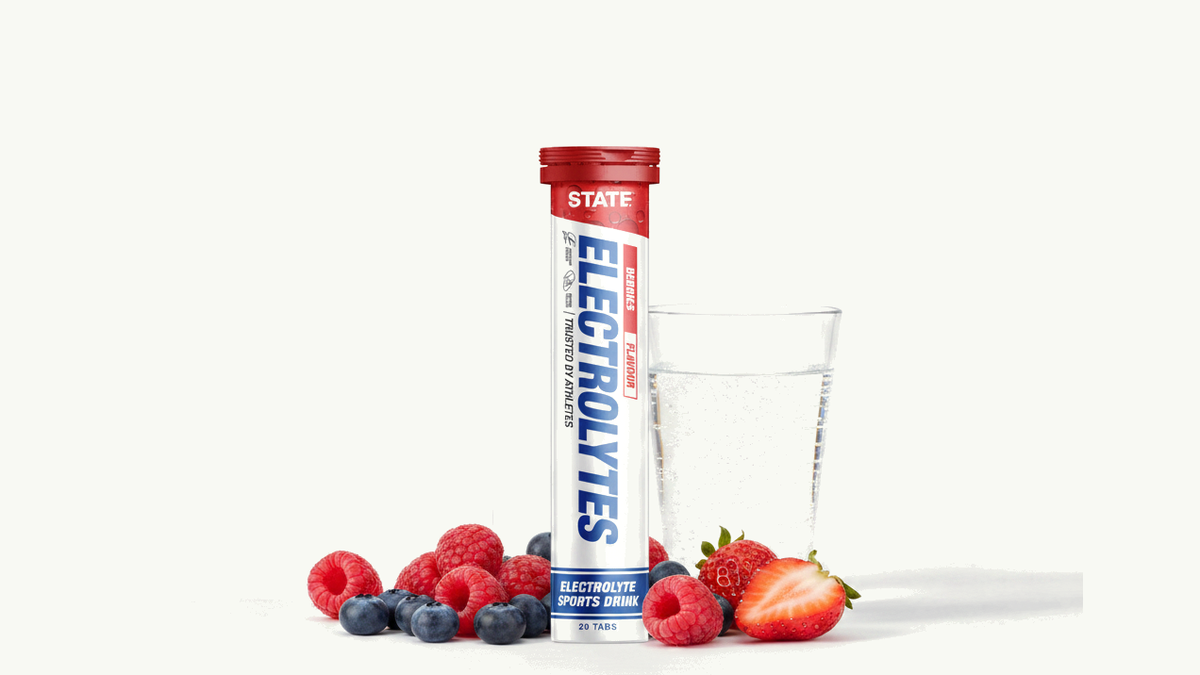
The format doesn't change the principle, but it does affect convenience. Powder is flexible in dosage and often cost-effective per serving. Effervescent tablets are light, compact and ideal on the go. Ready-to-drink options are the most convenient, but you're paying for water and packaging.
| Format | Strength | Less convenient | Suits |
|---|---|---|---|
| Powder | Adjustable dosage, cost-effective per serving | Requires measuring or scooping | Mixing at home, long training sessions |
| Effervescent tablet | Compact, easy to prepare a bottle anywhere | Fixed dosage per tablet | On the go, travel, competitions |
| Ready-to-drink | Open and drink | Relatively expensive for water | Convenience, directly after exercise |
Choose the format you'll actually use. The best electrolytes are, just like the best training plan, the version you'll stick with.
How do you use electrolytes in practice?
Keep it simple: during long or hot sessions, drink small sips regularly and follow the dosage on the label of your product. Adding more than recommended doesn't improve the drink; overly concentrated drinks are also harder on your stomach during exercise.
If you're training for something demanding, it pays to practise your drinking strategy just as you do your training plan. How nutrition and hydration come together during running, read in nutrition for running, and what a competition like Hyrox involves in what is Hyrox. Never experiment for the first time on race day – that's the classic recipe for a very long day.
Frequently asked questions about electrolytes
Are electrolytes necessary for an hour of exercise?
Usually not. For training sessions of about an hour under normal conditions, water is sufficient and you replenish your minerals with your next meal. Electrolytes become relevant for longer sessions, significant sweat losses or heat. Beyond that, they're mainly a more expensive way to drink.
What is the most important mineral in an electrolyte drink?
Sodium. That's by far what you lose the most through sweat, and it's where products differ most. Compare the sodium content per prepared serving. Potassium and magnesium play useful supporting roles; magnesium contributes to normal muscle function, but sodium determines whether the product does its job.
Can you get electrolytes from food?
Yes, largely. Salt in your food provides sodium, and vegetables, fruit, dairy and nuts supply potassium and magnesium. A normal diet replenishes daily losses perfectly well. Electrolyte products are for the moments when eating isn't practical: during and directly around long efforts.
Is an electrolyte drink the same as an isotonic sports drink?
Not quite. An isotonic sports drink contains not just electrolytes but also carbohydrates at a concentration approximately equal to that of your body fluids. Sugar-free electrolyte drinks provide minerals but no energy. For prolonged exercise, the approved claims apply specifically to the combination of carbohydrates and electrolytes.
Choosing the best electrolytes is therefore not a science, but a matter of honestly looking at your sodium needs, your sugar requirements and your convenience. One well-chosen product for the long, hot days – water for the rest. You don't need any more flavours than that.