






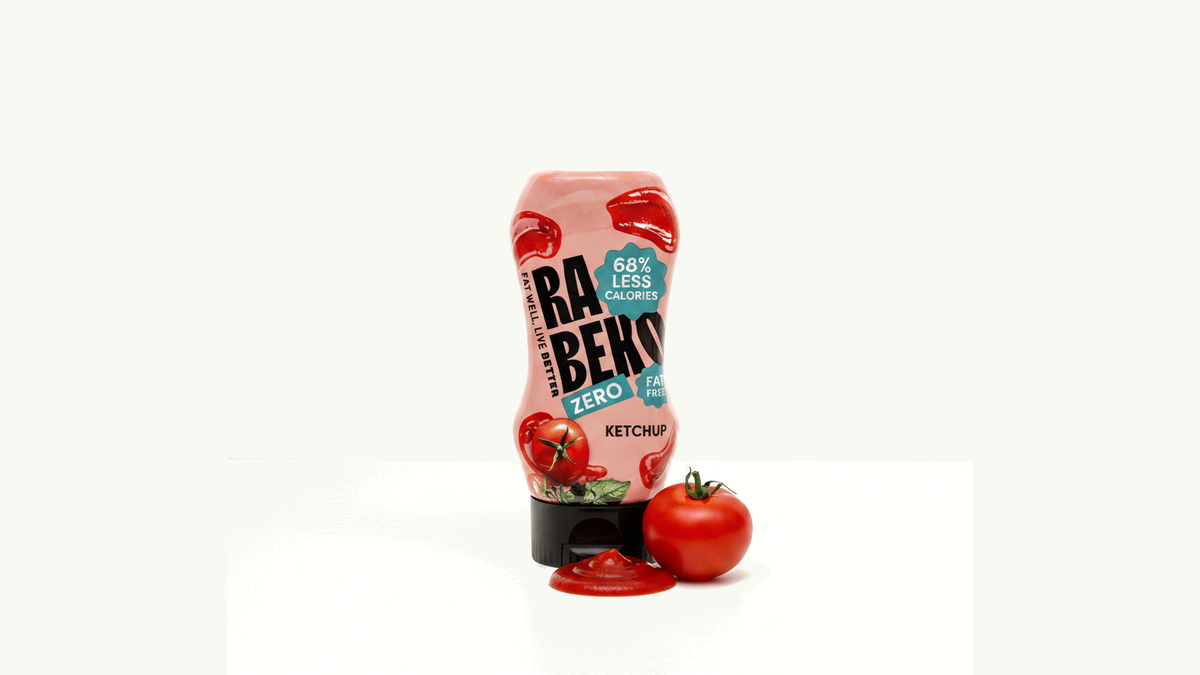
A zero sauce is a sauce with no added sugar and significantly fewer calories than the regular version. Which one you choose depends mainly on the occasion: savoury flavours for fries, snacks and hot meals, sweet varieties and light jam for breakfast, quark and desserts. If you're unsure, start with the flavour you already use most often.
Whether zero sauces are actually healthy is a different question. We answer that briefly further down, with a link to our in-depth, critical take on the matter. Here the focus is on the practical follow-up question: which flavour suits which dish, and where do you start if you're not yet familiar with the Rabeko range?
What exactly is a zero sauce?
A zero sauce is a sauce in which sugar has been replaced by sweeteners and which contains barely any fat. As a result, only a fraction of the calories you're used to from regular sauce remains per serving – while real sauce still ends up on your plate. No powder to mix, no special diet product: just a bottle of sauce.
Rabeko is the best-known brand in this category and the one we carry. The range consists of three groups: savoury zero sauces, sweet zero sauces and light jam. We took a close look at how these sauces are made in our report from the Rabeko factory.
Which zero sauce should you choose?
Choose your zero sauce based on when you'll use it, not on what happens to be popular. If you mainly eat fries, snacks and hot meals, the savoury flavours are your best bet. If you start your morning with quark or yoghurt, the sweet sauces and light jam will serve you better.
| Occasion | What works well |
|---|---|
| Fries, snacks and air fryer bites | Savoury classics, the flavours you know from the snack bar |
| Wraps, bowls and burgers | Savoury zero sauce as a dressing or burger sauce |
| Quark, yoghurt and porridge | Sweet zero sauce or light jam |
| Pancakes and waffles | Light jam or a sweet sauce |
| Desserts and snacks | Sweet zero sauce |
The flavour range changes throughout the year. You'll find the current overview on our Rabeko brand page.
How is the Rabeko range structured?
The Rabeko range is divided into three groups, each covering a different moment of the day: savoury sauces for meals and snacks, sweet sauces for dairy products and desserts, and light jam for bread and breakfast. You don't need one miracle sauce – just two or three flavours that fit your eating habits.
Savoury zero sauces
These are the flavours you'd normally reach for with fries and snacks, but without added sugar and with far fewer calories. You use them exactly like regular sauce: as a dip, over a hot meal or as a flavour boost in a wrap. Precisely because the way you use them stays the same, the switch is easy.
Sweet zero sauces
Think dessert-style flavours you pour over quark, ice cream or pancakes. This is where the difference from the classic version is greatest, because traditional dessert sauces consist largely of sugar. A sweet zero sauce turns a tub of low-fat quark into something that genuinely tastes like a dessert.
Light jam
Jam with significantly less sugar and fewer calories than standard preserves. On bread, stirred into yoghurt or as a filling in pancakes. Of the three groups, this is the most everyday: nobody at the breakfast table will notice that something different is on the table.
What's the difference compared to regular sauce?
The difference lies almost entirely in the composition, not in the way you use it. A zero sauce contains no added sugar and barely any fat, which means the calories per serving are considerably lower. You spread, dip and pour it just as you always have.
| Feature | Regular sauce | Zero sauce |
|---|---|---|
| Added sugar | Often quite a lot, especially in sweet sauces | No, sweetened with sweeteners |
| Calories per serving | Depending on the type, often a lot | A fraction of that |
| Use | Dip, topping, flavouring | Exactly the same |
| Taste | The familiar taste | Comes close, not one hundred per cent identical |
Who are zero sauces useful for?
Zero sauces are useful for anyone watching their calories without wanting to give up the pleasure of sauce: people looking to lose weight or maintain their weight, athletes tracking their intake and households that simply enjoy good food. You don't need to change anything about what you already cook.
That's the straightforward story. No separate diet meals, no list of forbidden products on the fridge. In practice, we see three situations where the sauces make the most difference:
- You're watching your weight. Sauce is often a forgotten entry: you count the fries, not the mayonnaise. Swapping the sauce saves calories without eating any less.
- You track calories or macros. A zero sauce is easier to fit into your plan and makes the maths a lot less daunting.
- You eat together as a family. Everyone gets the same fries and the same pancakes; you just pick up the other bottle. Nobody misses a thing.
Are zero sauces healthy?
Zero sauces are primarily a smart swap: you replace a calorie-heavy habit with a lighter alternative without overhauling your diet. Sauce alone won't make you healthy – zero sauce included – and nobody here claims otherwise. The full, critical version of this answer can be found in what are healthy sauces.
How to get the most out of them in practice
The best zero sauce is the one you'll actually keep using. A few straightforward tips to help with that:
- Start with two or three flavours. One savoury classic, one sweet, optionally a light jam. That's all you need to find out whether it works for you.
- Replace, don't stack. The benefit comes from swapping your regular sauce, not from adding an extra layer on top of everything you already eat.
- Put them where the old sauce used to be. In the fridge door or next to the hob. What you see, you use.
- Work them into dishes you already make. Need inspiration? In these seven Rabeko recipes you can see how the sauces fit into everyday meals.
Frequently asked questions about zero sauce
Does a zero sauce taste the same as regular sauce?
It comes close, but it's not identical. Sweeteners produce a slightly different flavour profile to sugar. Most people get used to it after a few times, especially when used as a dip or topping. Start with the flavour you know best – that's the fairest way to judge what the difference actually is.
What's the difference between zero and light?
Light may only appear on a label if the product contains significantly less sugar, fat or calories than the standard version. Zero goes further: no sugar has been added and the number of calories per serving has been reduced to a minimum. If in doubt, always check the label – that's where the exact composition is listed.
Can zero sauce help with weight loss?
Sauce alone won't make you lose weight. That said, replacing a calorie-dense sauce with a zero alternative does save calories – and within an eating pattern you can stick to, that counts. Don't expect miracles; we don't promise any here either.
Can I use zero sauce in hot dishes?
Most zero sauces are used cold, as a dip or topping over a hot dish. Briefly heating them is usually fine, but we advise against cooking them for a long time. Check the label of the specific sauce – it will tell you what it's intended for.
How quickly will my zero sauces arrive?
Order before 22:00 and your order will be dispatched the same working day; PostNL does not deliver on Sundays. With every shipment you receive a track-and-trace code, so you know exactly when your new stock will arrive. Handy when the old bottle has just run out.
Start small: one savoury and one sweet flavour, and check after two weeks what you're actually using. Healthier is possible. Do what works.