







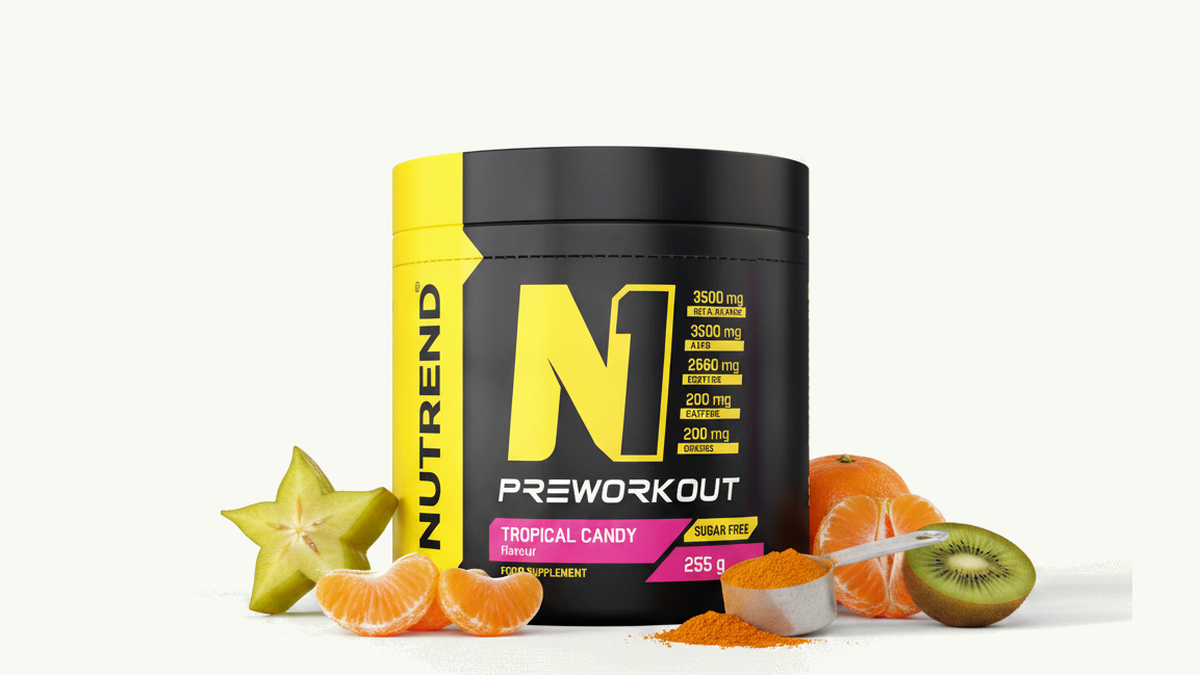
Pre-workout is a supplement you take roughly twenty to thirty minutes before your training session, usually as a powder dissolved in water. The best-known active ingredient is caffeine, often combined with amino acids such as citrulline and beta-alanine. It's explicitly an extra for those who want to start their workout with more focus — not a prerequisite for exercising. Here's what's in it, what those ingredients are, and who pre-workout is and isn't suitable for.
What exactly is pre-workout?
A mix of stimulating and supportive substances you take shortly before exercising. Powder in a shaker is the standard format; pre-workout shots are also available ready to drink. The idea: to start your training session feeling fresher and more focused on days when that doesn't come naturally. Whether it works depends mainly on the caffeine and how you personally respond to it.
The market around it is a story in itself: neon-coloured tubs, names as if you're launching a rocket, and labels full of promises. The contents are usually far less exciting than the packaging suggests. Virtually every pre-workout revolves around the same handful of ingredients in varying dosages. Once you know them, you can see straight through the marketing.
What ingredients are usually in it?
The core consists of caffeine, citrulline and beta-alanine, often supplemented with taurine, tyrosine and B vitamins. Some formulas also contain creatine. The dosage per scoop varies considerably between brands, so the label is always your starting point — not the front of the tub.
| Ingredient | What is it? | Good to know |
|---|---|---|
| Caffeine | Stimulant, the same as in coffee | Often around 150 to 300 mg per serving; check the label |
| Citrulline (or citrulline malate) | Amino acid | A staple base ingredient; no approved health claim exists for it |
| Beta-alanine | Amino acid | Known for the harmless tingling sensation shortly after taking it |
| Creatine | Naturally occurring substance | Works through daily intake, not per individual dose |
| Taurine, tyrosine, B vitamins | Supporting substances | B vitamins contribute to the reduction of tiredness and fatigue |
More ingredients doesn't automatically mean a better pre-workout. A long ingredient list looks impressive, but the difference you actually feel comes almost entirely from the caffeine dosage.
What does caffeine do in pre-workout?
Caffeine is the engine of virtually every pre-workout containing stimulants. It's exactly the same substance as in coffee, but more precisely dosed: often 150 to 300 mg per scoop, whereas a cup of coffee contains roughly 80 to 100 mg. How strongly you notice this varies considerably from person to person.
To be honest: the well-known caffeine claims regarding alertness and performance have never been formally approved by the EFSA, so we'll leave the big promises aside here. What is established: caffeine and sleep don't mix well, and poor sleep will cost you far more than any scoop of powder can ever make up for. Don't take pre-workout too late in the day. And importantly: pre-workout containing caffeine is not suitable for those under 18, pregnant women, or people who are sensitive to caffeine.
What are citrulline and beta-alanine?
Two amino acids found in virtually every formula. Citrulline occurs naturally in watermelon, among other sources, and is often added as citrulline malate. You may know beta-alanine from the prickling, tingling sensation on your skin shortly after taking it: a well-known and harmless effect that fades on its own.
For both substances: there are no approved health claims, so we make no promises about effects. They're regulars in the formula, not proven wonder ingredients. In practice, choosing a pre-workout comes down mainly to caffeine dosage, taste and how easily the powder drinks. That sounds unromantic, but it really is that simple.
How do you use pre-workout smartly?
Take it roughly twenty to thirty minutes before training and stick to the dosage on the label. When trying a new product, start with half a dose to see how you react. Plan your caffeine intake well before bedtime, otherwise you'll pay the price at night. Taking two scoops because one "doesn't feel like enough" isn't smart; the label exists for a reason.
How quickly it kicks in and how long it lasts varies by person and product; we've covered that separately in how quickly and how long does pre-workout work. If you train in the evening or simply want to avoid caffeine, there's a fully-fledged alternative: pre-workout without caffeine.
Do you actually need pre-workout?
No. Getting enough sleep, eating well and training consistently do more for your progress than any scoop of powder ever will. Pre-workout is the cherry on top for those who already have the basics in order — not the foundation itself. Those who train without it aren't missing anything essential. If you notice that without a scoop you can't even bring yourself to go to the gym, that's more of a signal about your sleep or planning than a reason to reach for a stronger formula.
If you want one supplement with solid evidence behind it, look to creatine instead: daily intake, an approved health claim and straightforward but solid research; read what does creatine do. Pre-workout can sit alongside it just fine, as long as you see it for what it is: a tool for the days when motivation is lacking, not the reason you get stronger.
Frequently asked questions about pre-workout
Is the tingling feeling from beta-alanine dangerous?
No. That tingling on your skin, often on your face and hands, is a well-known and harmless effect after taking beta-alanine. It fades on its own. If you find it unpleasant, choose a pre-workout with less or no beta-alanine.
Can you use pre-workout every day?
You can, but it's not ideal. Your body becomes accustomed to caffeine, which means the effect diminishes and you seem to need more and more. Save pre-workout for your heaviest training sessions, stick to the label, and never take it late in the day.
What is a pre-workout shot?
A ready-to-drink bottle containing the same type of ingredients as powder, but without the need for a shaker or mixing. Convenient for on the go, in your gym bag or on days when you don't have a shaker to hand. Pay attention to the caffeine dosage per bottle here too; a small format doesn't automatically mean a light dose.
Can you just have a cup of coffee instead?
Yes. For the caffeine, coffee works too; the dose per cup is just lower and less predictable. Pre-workout is particularly handy because the dosage is fixed and easy to drink before training. If you're happy with your double espresso, there's no need to change a thing.
Can you combine pre-workout with creatine?
Yes, absolutely. Creatine is taken daily at a set time; pre-workout only around your training sessions. Just check the label: some pre-workouts already contain creatine. That's not a problem, but it's good to know where your total intake is coming from.
Pre-workout is exactly what the name says: something for before your training, not the training itself. Use it mindfully on the occasions it adds something — or skip it without a second thought.