







Creatine is a substance naturally produced by the body that your muscles use to release energy at lightning speed during short, explosive efforts. The approved EFSA claim is clear: creatine increases physical performance during successive bursts of short-term, high-intensity exercise, with a daily intake of 3 grams. So not a miracle product, but the most thoroughly researched sports supplement there is. Below you'll find a straightforward explanation of how it works, who can benefit from it, and which stories you can safely ignore.
What does creatine do in your body?
Creatine increases the stores of phosphocreatine in your muscles. Your body uses these stores to rapidly replenish energy within seconds during short, intense effort. With fuller stores, you can sustain that fast system just a little longer: an extra rep in the gym, a sprint that fades less quickly.
Your body produces creatine on its own and also obtains some from food, mainly from meat and fish. The majority is stored in your muscles. A supplement helps top up those stores further until they're saturated. Building up takes time: think in weeks, not days. Creatine is therefore a long-game supplement, not something for the day itself.
How does the phosphocreatine system work?
The phosphocreatine system is the turbo mode of your muscles: it delivers energy almost instantly in the first seconds of every explosive effort. Your muscles use ATP for this — the universal energy currency of the body. Phosphocreatine recharges spent ATP within seconds, allowing you to keep going a little longer.
Think of it like a phone and a power bank. The battery (ATP) runs flat after a few seconds at full throttle. The power bank (phosphocreatine) recharges it on the spot, but eventually runs out too. After that, your body switches to slower energy systems that burn carbohydrates and fats. Creatine makes that power bank bigger. Not infinitely bigger, but noticeably so during repeated short efforts with rest in between.
What exactly does the EFSA claim say?
The only approved health claim for creatine states: "Creatine increases physical performance during successive bursts of short-term, high-intensity exercise." The condition attached to this claim is a daily intake of 3 grams. Manufacturers are legally not permitted to claim more than this — and that's a good thing.
Read that wording carefully, because every word counts. "Successive bursts of short-term, high-intensity exercise": think sets in the gym, sprints, jumps. There's nothing about building muscle mass while you sleep, losing fat faster, or eternal youth. Any promise that goes beyond this one sentence comes from a marketing department, not from the scientific register. It really is that simple.
What do you notice in practice?
Not much that's spectacular — and that's perfectly normal. Creatine doesn't give you a kick or boost on the day itself. The effect lies in the accumulation: after weeks of daily intake, your stores are saturated and you can sustain repeated explosive efforts just a little longer. You see it in your training, not in how you feel.
Think of that one extra rep at the end of a heavy set, or an interval that drops off less sharply. It sounds modest, but those who train consistently see those small differences add up over months. If you conclude after three days that it "does nothing", you haven't failed — you've simply measured too soon. Keep a training log instead of going by feel: that's where you'll notice the difference first. Consistency is literally the whole story with creatine.
Who benefits from creatine?
Anyone who trains with short, intensive efforts: strength training, fitness, sprinting, interval work, and team sports with lots of brief actions. That profile aligns perfectly with the EFSA claim. Whether you're male or female makes no difference; muscles work the same way in everyone.
For pure endurance athletes, it's more nuanced. A steady long run barely relies on the phosphocreatine system, so the gains there are limited. For more detail on this, including the weight aspect, read creatine and running. If you train in a mixed way — combining strength and cardio — creatine is a great fit.
What's the difference between creatine and protein?
They each do something different. Proteins contribute to the growth and maintenance of muscle mass; creatine increases physical performance during successive bursts of short-term, high-intensity exercise. Protein is the building material, creatine is the energy reserve. One doesn't replace the other, and you don't need to choose between them.
In practice, they complement each other logically. Your training draws on your creatine stores; recovery and muscle building afterwards depend on protein from your regular diet, optionally supplemented with a shake. If you have to start somewhere, start with the basics: sufficient protein from normal meals. Creatine is then the most logical second step — precisely because the evidence is so strong and the effort so small.
How much creatine do you need per day?
The EFSA claim is linked to 3 grams per day. In practice, many athletes take between 3 and 5 grams; follow the label of your product. A loading phase is not mandatory: it gets you to saturation slightly faster, but the end result is exactly the same.
The timing of your intake barely matters. No timers, no protocols: one fixed moment per day that you can easily stick to, including on rest days. For tips on how to approach this smartly, read when to take creatine. And as with any supplement: creatine is an addition to a healthy, varied diet, not a replacement for one.
Which myths about creatine can you ignore?
Most stories surrounding creatine are older than the research and more persistent than the facts. The bottom line: in healthy adults taking a normal daily dose, there is no solid evidence for the well-known scare stories. If you have doubts due to a medical condition or medication use, consult your doctor first.
| Myth | Plain answer |
|---|---|
| "It makes your hair fall out" | Never convincingly demonstrated. |
| "Bad for your kidneys" | No solid evidence in healthy adults at a normal dose. Kidney issues? See your doctor first. |
| "Creatine is doping" | No. Creatine is not on the doping list. |
| "It makes you fat" | You may gain a little weight due to water retention, but that water is inside the muscle. |
| "You need to cycle it or take breaks" | Not necessary. A fixed daily dose is sufficient. |
Notice how boring the truth is? Exactly. Creatine is so thoroughly researched that there's little room left for exciting stories. For a supplement, that's the greatest compliment you can receive.
Which creatine should you choose?
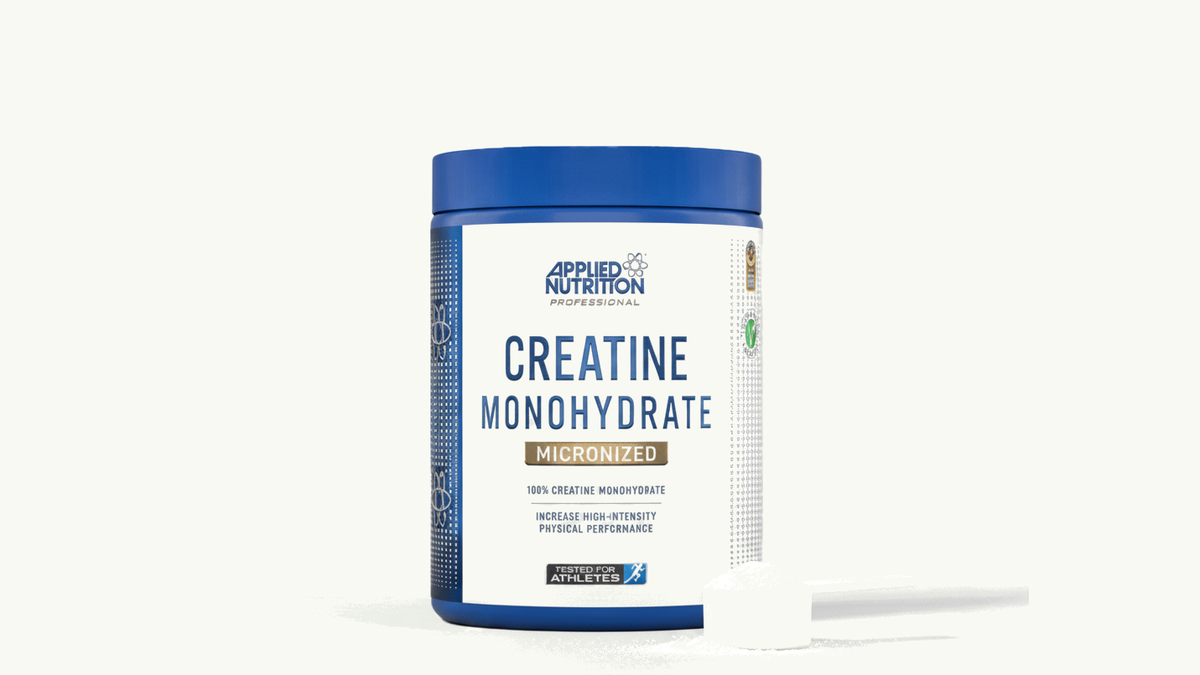
Creatine monohydrate. That's the form used in virtually all research and the standard you fall back on in practice. More expensive variants with fancier names don't have that evidence. Simple powder, plain monohydrate — done.
Within monohydrate, there are differences in purity and the origin of the raw material; Creapure® is the best-known German quality label. For guidance on how to choose without getting lost in marketing jargon, read which creatine is the best.
Is creatine also found in regular food?
Yes, mainly in meat and fish. But the amounts are small compared to the 3 grams in the claim: you'd have to eat large portions every day to come close. That's why a scoop of powder is the practical route for most athletes.
To find out which foods contain the most creatine, what cooking does to it, and how things stand if you eat vegetarian, read where creatine is found.
Frequently asked questions about creatine
Is creatine safe?
Creatine is the most thoroughly researched sports supplement there is. In healthy adults taking a normal daily dose, there are no indications of problems. Follow the label. If you take medication or have a medical condition, consult your doctor first.
Does creatine work even if you don't train?
The claim is linked to short, high-intensity efforts. Without training, there's therefore little to improve: you're increasing an energy reserve that you then don't draw on. Creatine is useful as a complement to your training, not as a replacement for it.
How quickly do you notice the effects of creatine?
Think in weeks. Your muscle stores build up gradually with daily intake, so a directly noticeable effect on day one isn't to be expected. That's not a sign that it isn't working — it's exactly how it should go. Continuing to take it every day is the only thing that matters.
Can you combine creatine with protein or pre-workout?
Yes, absolutely. You take creatine daily at a fixed time, while protein and pre-workout are used at their own moments. The products don't interfere with each other. Many athletes simply stir their creatine into the shake they're already drinking.
Is creatine suitable for women too?
Yes, exactly the same story. The claim applies to short, high-intensity efforts — not to a specific gender. Women's muscles don't work any differently from men's, and you therefore don't need a special "women's variant" with a pink label. The same monohydrate, the same 3 grams per day.
So creatine does one thing, and it does it well: giving your fast energy system a larger reserve for short, intensive efforts. Everything else is noise. Healthier is possible. Do what works.