







The straightforward answer: there's no need to rush. A portion of 20 to 40 grams of protein within a couple of hours after your workout is more than timely. What matters more than the timing is your daily total: anyone who consistently hits their protein target each day will capture virtually all the gains – shaker in the changing room or not.
Yet the question persists, mainly because of the famous "anabolic window" that supposedly only stays open for half an hour. Below you'll find out how quickly you really need to eat, how many grams are useful and what are the smart choices after a workout.
How quickly do you need protein after exercise?
A protein-rich meal within a couple of hours after your workout is sufficient. Your body processes protein for hours after exertion; the window doesn't close after thirty minutes. If you've already eaten in the hours before your workout, there's even less urgency.
Practically speaking: if you train at 6 pm and sit down for dinner at 8 pm, that is your protein moment. An extra shake in between adds little. If you train first thing in the morning on an empty stomach and then skip breakfast too, the story changes – not because of a magic window, but because you won't take in your first protein until hours later, making your daily total harder to reach.
How much protein after exercise?
A portion of 20 to 40 grams of protein is a solid benchmark after a workout. That's roughly a generous serving of quark, a couple of eggs with bread, or one shake. More is fine, but yields little additional benefit per portion; spread the rest of your requirements across your other meals.
Incidentally, what you ate before training counts just as well. If you had a protein-containing meal two hours before exercising, that protein is still fully available during and after your workout. The post-session portion doesn't need to repair anything; it simply tops up.
More important than that single portion is your total at the end of the day. For strength athletes this is roughly between 1.6 and 2.2 grams per kilogram of body weight; protein contributes to the growth of muscle mass. For the benchmark that suits your goal and body weight, see how much protein per day. The post-workout portion is one piece of that puzzle, not a separate science.
Does the anabolic window actually exist?
There is indeed a period in which your body is more receptive to nutrients after training, but it's not a door that slams shut after thirty minutes. In practice, that window stays open for hours. The panic shake next to the squat rack is therefore mostly changing-room folklore.
The myth persists because there's a kernel of truth in it: right after training, your body can certainly use some fuel. But that effect doesn't disappear after half an hour, especially not if you've eaten normally earlier in the day. Research into protein timing consistently points in the same direction: the daily total explains the results, the timing at most the fine details. Does a fixed shake after training make your routine easier? Keep drinking it. Just don't do it out of fear that your workout will otherwise go to waste – because it won't.
What's best to eat after exercise?
Anything that delivers a solid serving of protein counts: a regular meal, quark, eggs or a shake. Choose based on convenience and appetite, not on rules. Not in the mood for something creamy after a sweaty session? Clear whey drinks light and refreshingly like a juice.
| Option | Handy when |
|---|---|
| Hot meal | You're eating anyway within a couple of hours after training |
| Quark with fruit or muesli | At home, quick, and with some immediate satiety |
| Protein shake (whey or vegan) | On the go, little appetite, or no time to cook |
| Clear whey | After a sweaty session when a milkshake feels too heavy |
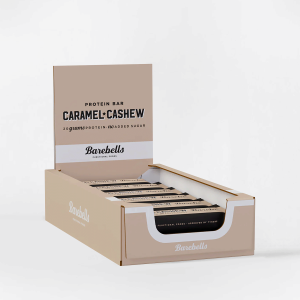
| Protein bar | In your bag for after a late workout or as a snack on the go |
If your next regular meal is coming up soon, that meal is the most logical choice. And what you eat before training counts just as much for your day; the entire puzzle from preparation to recovery meal is covered in eating before and after exercise.
Do you also need carbohydrates after exercise?
After a standard strength session your normal eating pattern takes care of that automatically; there's no need to separately reload on carbohydrates. After long endurance sessions of well over an hour, the situation is different: your stores have been seriously depleted and replenishing with carbohydrates is genuinely worthwhile.
For the average gym-goer the message is therefore relaxed: your evening meal with potatoes, rice or bread already does the job. Runners, cyclists and other endurance athletes who have been out for a long time combine protein with a generous portion of carbohydrates and sufficient fluids after their session. Again, no exact gram-by-gram science here; a normal meal with a little extra more than covers most training sessions.
Does a shake work better than real food?
No. A shake doesn't work better – it works faster and more conveniently. Nutritionally, a portion of quark or a couple of eggs does exactly the same as a scoop of whey; the difference is that a shake is ready in thirty seconds and fits in your sports bag.
A shake therefore makes sense when you have little appetite after training, you're still on the go, or you won't sit down to eat until late. If you're almost immediately home in front of a well-stocked fridge, the shaker can stay in the cupboard. Unsure about the timing – before or after training? We already looked into that in protein shake before or after exercise: there too, the daily total wins.
Frequently asked questions about protein after exercise
Do I need to drink a shake immediately after training?
No. A protein-rich meal within a couple of hours is more than enough; your body processes protein long after the workout. A shake right after is perfectly fine if it's convenient, but it's a matter of practicality, not necessity.
How much protein do you need after cardio or running?
After endurance training too, a standard portion of 20 to 30 grams of protein at your next meal works perfectly. Endurance athletes don't need a separate protocol for this; it's also about your total intake over the day, alongside sufficient carbohydrates and fluids after a long session.
Does my dinner count as protein after exercise?
Yes, completely. An evening meal with meat, fish, legumes or tofu within a couple of hours after training does exactly what a shake does. Anyone who simply sits down to eat after training has already sorted their post-workout moment.
What if I train late in the evening?
Then simply eat something protein-rich before bed: a bowl of quark is a classic choice, casein also works well thanks to its slow release. You don't need to go to bed on an empty stomach out of fear of late-night calories; the daily total is what counts, not the clock.
The summary to remember: eat a normal portion of protein within a couple of hours after your workout and focus your energy on your daily total. That's all there is to it.