







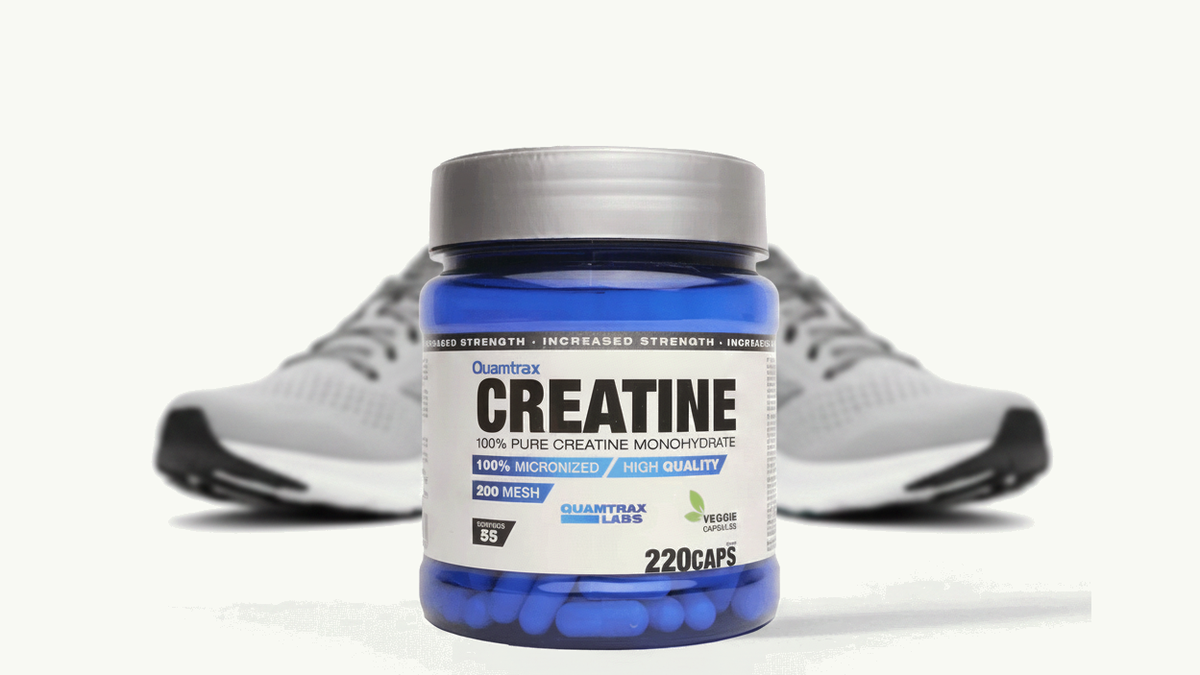
Honest answer: creatine is most useful for runners whose training includes short, intensive efforts – such as sprints, intervals and hill repeats. The approved EFSA claim states: creatine increases physical performance during successive short, high-intensity exercises, with a daily intake of 3 grams. No such claim exists for easy endurance running. And there is one thing to bear in mind: it may cause a slight increase in body weight. Read on to find out how to weigh that up.
Is creatine useful for runners?
It depends on how you train. If you do sprint work, intervals or strength training alongside your long runs, you are targeting exactly the energy system that creatine acts on. If your week consists mainly of easy miles, the benefit is small and the weight aspect carries relatively more significance.
Running is not a single sport. A track session with ten times 200 metres demands something completely different from your body than a relaxed ninety-minute Sunday long run. Anyone who takes an honest look at their own training week will quickly work out whether creatine adds value or simply becomes another tub on the kitchen counter – and that honest answer saves you one more supplement to think about.
Why does creatine work mainly for sprints and intervals?
Because short, explosive efforts rely on the phosphocreatine system: the energy store your muscles draw on in the first seconds of a sprint. Creatine increases that store, allowing you to sustain repeated short efforts just a little longer. The approved claim applies precisely to this type of effort – nothing else.
During interval training you are essentially doing exactly that: going short and hard again and again, with rest or jog recoveries in between. That is the scenario in which a saturated creatine store can make a difference. For a full explanation of how that system works – powerbank analogy included – see what does creatine do.
What does creatine do for long, easy runs?
Very little directly. An easy run relies almost entirely on your aerobic system, which burns carbohydrates and fats. The phosphocreatine system barely features. There is therefore no approved claim for creatine and endurance; anyone selling you that promise is selling you noise.
Indirectly, however, there may be something. Many runners do strength training alongside their running to become stronger and more resilient, and that training does consist of short, high-intensity efforts. Anyone who takes that seriously therefore still fits the right profile with creatine. Just to be clear though: your easy kilometres will not get faster because of it, and that deserves to be said.
| Type of training | Relies on the phosphocreatine system? | Benefit of creatine |
|---|---|---|
| Track sprints | Strong | Matches the claim |
| Intervals and hill repeats | Strong | Matches the claim |
| Strength training alongside running | Strong | Matches the claim |
| Tempo run | Limited | Small |
| Easy long run | Minimal | Small; weight aspect is a factor |
The table immediately shows why this is not a yes-or-no question. Two runners with the same weekly volume can reach completely different conclusions: one does track sessions and a strength session, the other runs five times at an easy pace. So look not at what other runners are taking, but at what your own schedule actually demands.
Will you gain weight from creatine?
Often slightly, yes. Creatine draws water into the muscle cell, so a saturated store means a little extra fluid in your muscles. This usually amounts to a modest change on the scales. It is not fat, but for anyone racing against the clock, every extra gram counts. In strength athletes that fluid in the muscle is welcome; in runners it deserves a conscious assessment.
That is the honest trade-off for runners. If you run recreationally, you will barely notice it in practice. If you are chasing a personal record over ten kilometres or beyond, you do not want to try something new right before a race. Test creatine during a quiet training block and see what it does to your feel and times, rather than discovering it during race week.
How do you use creatine as a runner?
Exactly like everyone else: 3 grams daily, including rest days, at a fixed time that you can easily stick to. A loading phase is not necessary and the timing barely matters. Follow the label on your product and keep drinking normally. When in doubt, choose plain creatine monohydrate – the best-researched standard – and keep in mind that the effect builds over weeks, not per session.
Think of creatine as one building block within a bigger picture. What you eat and drink around your training does more for your endurance performance than any tub; the complete overview is in running and nutrition. And if you train in a hybrid way – combining running with strength elements such as Hyrox – your training profile sits squarely in the zone where creatine is a great fit.
Frequently asked questions about creatine and running
Will creatine make me slower?
Not the substance itself, but the extra fluid in your muscles may be a factor over long distances. For most recreational runners the difference is negligible. If you are running at your limit, test creatine in a quiet training block and decide based on your own times – not on hearsay.
Does creatine help with recovery after a long run?
There is no approved claim for that, so you will not find that promise here. The claim concerns performance during successive short, high-intensity efforts. For recovery after long runs, your nutrition, hydration and sleep are the levers you can genuinely pull.
Should I only take creatine on training days?
No – take it every day. The effect comes from a saturated store in your muscles, which requires daily maintenance. If you consistently skip rest days, saturation slowly drops back down. One fixed daily moment – for example at breakfast – works best and is also the easiest to remember.
Can creatine be taken with a sports drink or electrolytes?
Yes, absolutely. Creatine does not interfere with anything; you can dissolve your daily scoop in your sports drink if you like. For long or hot training sessions, fluid and mineral replenishment remains the priority; how that works is explained in isotonic sports drink.
For runners, creatine is neither a must nor a gimmick – it is a choice that depends on your training week. Lots of sprint, interval and strength work: worthwhile. Mainly easy kilometres: feel free to skip it. Healthier is possible. Do what works.