







Collagen is the most abundant protein in your body. It's found in your skin, bones, tendons and connective tissue. As a supplement, it's hugely popular, but there isn't a single approved health claim for collagen. Below you'll find out what it is, which types exist and what you can honestly expect from it.
What is collagen?
Collagen is a structural protein that your body produces itself from amino acids. It acts as a kind of scaffolding in your connective tissue: it gives firmness and cohesion to skin, bones, tendons, cartilage and blood vessels. Of all the proteins in your body, collagen is the most prevalent.
Collagen production changes over the years. That's normal ageing, not a defect you need to repair with a pot of supplements. Yet that's precisely the sales pitch behind many collagen products. So it's useful to understand what collagen is and isn't before you put anything in your shopping basket.
Which types of collagen are there?
There are dozens of types of collagen, but three are most common: type I, type II and type III. Type I is found mainly in skin, bones and tendons and is by far the most prevalent type. Type II is found in cartilage. Type III is found in skin and blood vessels, often alongside type I.
| Type | Where it's mainly found | In supplements |
|---|---|---|
| Type I | Skin, bones, tendons | Most widely used, often from bovine hide or fish |
| Type II | Cartilage | Often from chicken, in dedicated products |
| Type III | Skin, blood vessels | Usually combined with type I |
Marketing loves to make a science out of those types. In practice, the distinction is mainly descriptive: it tells you where the raw material comes from, not what the product will do inside your body.
Where is collagen found?
Collagen is found exclusively in animal tissue. In food, you'll find it mainly in cuts of meat with lots of connective tissue, such as pulled meat and chicken skin, and in bone broth and gelatine. Plants contain no collagen. What's more, your body produces collagen by itself, from the amino acids in your daily diet.
That last point is often overlooked. Anyone who eats enough protein continuously supplies their body with the building blocks it needs to produce collagen. A separate collagen source isn't necessary for this. Gelatine pudding is therefore not a health strategy — at most, it's a dessert.
What exactly is a collagen supplement?
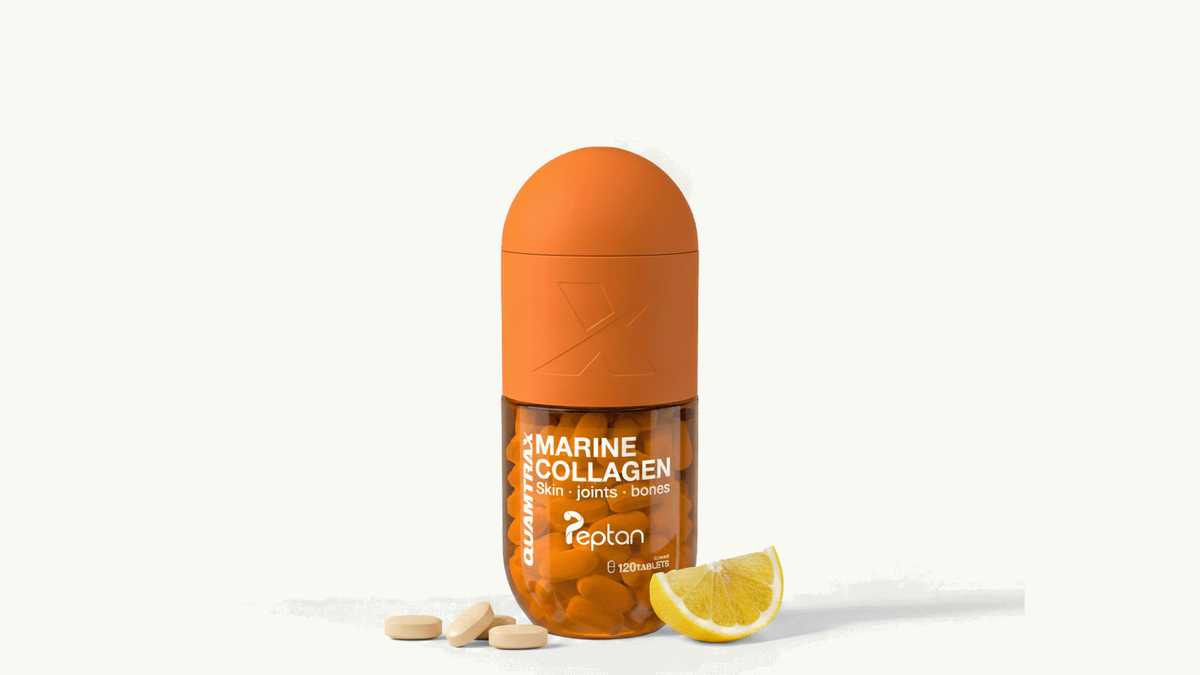
A collagen supplement usually contains hydrolysed collagen, also known as collagen peptides. Here, the collagen has been cut into small pieces so that it dissolves easily in cold and warm liquids. The raw material typically comes from cattle (bovine) or fish (marine). You'll find it as powder, capsules and drinks.
Powder is the most widely used form: it's neutral to mildly flavoured and dissolves in coffee, yoghurt or a shake. Capsules are easy to take on the go, but each capsule contains little, meaning you'd often need to take several a day to reach the dosage of one scoop of powder. Whatever you choose: it's the same ingredient in a different package.
What does research say about collagen supplements?
Honest answer: the evidence is limited. Research is being conducted on collagen and areas such as skin and joints, but the studies are often small, short and regularly funded by manufacturers. Results vary. That's too thin for firm conclusions, and therefore too thin for firm promises.
There's also a practical consideration. Your digestive system breaks down proteins, including collagen, largely into individual amino acids and small peptides. You're not drinking skin or cartilage directly to where you want it; you're drinking building blocks, and your body decides what to do with them. Anyone who realises this immediately views the pretty pictures on the packaging with a much more critical eye.
Why are there no health claims on collagen?
In the EU, supplements may only carry health claims that have been approved by the EFSA. No claim has been approved for collagen. Statements such as "for supple joints" or "for beautiful skin" are therefore not legally permitted on collagen products, no matter how often you see them on social media.
That doesn't automatically mean collagen does nothing. It does mean that the evidence doesn't meet the legal bar for such a promise. We think you deserve to know that. If you encounter sellers who do promote collagen as a skin or joint remedy, you know at least something about how seriously they take the rules.
Is collagen a good protein source?
As a protein source, collagen is mediocre. The grams count just fine, but collagen is an incomplete protein: it lacks the essential amino acid tryptophan and contains relatively little of several other essential amino acids. If your main goal is to get your protein intake on track, complete sources are the more logical choice.
Think of dairy, meat, fish, eggs and legumes, optionally supplemented with a shake. How much you need per day is calculated in how much protein per day. And to find out which powders and bars exist, read the different types of protein products. Using collagen as your sole protein source is in any case not a good plan.
Should you take collagen?
It's not necessary. Your body makes collagen itself, and with sufficient protein from regular food you supply the building blocks for this naturally. Want to try collagen anyway, perhaps out of curiosity? That's perfectly fine: stick to the dosage on the label and don't expect miracles.
Our order of priority remains the same as with every supplement: first get your nutrition, sleep and training sorted, then see what a pot can add. Where collagen fits in that list, and which supplements come first, you can read in which supplements do you really need. Spoiler: collagen isn't at the top.
How do you use collagen if you want to try it?
Simple: choose one product, follow the dosage on the label and take it at a set time. Collagen peptides dissolve in coffee, tea, yoghurt or a shake and are virtually tasteless, so incorporating it isn't the problem. The art is sticking with it without expecting results that no one is allowed to promise you.
Give yourself an honest evaluation moment in advance. Agree with yourself that after a few months you'll assess whether you notice any difference, and then be willing to stop if the answer is no. Without that kind of agreement, a pot easily becomes a habit you keep refilling out of vague hope. Do you take medication, are you pregnant or do you have health issues? Consult your doctor first, as with any supplement.
How does collagen compare to other supplements?
In a sober supplement ranking, collagen sits at the back. Nutrients such as protein, creatine, vitamin D and magnesium have approved claims; collagen has none. If you can only spend your money once, the first category will demonstrably deliver more than a product that relies on its packaging.
That's not a judgement if you still like collagen. It's an order of priority. Basics first, then proven additions, and only then the experiments. That keeps your kitchen cupboard manageable and your expectations realistic.
Frequently asked questions about collagen
Is collagen good for your skin?
That claim isn't approved, so we don't make it. There is research into collagen and the skin, but the evidence is limited and inconsistent. Legally, a collagen product in the EU may not carry a skin claim. Anyone who promises it to you anyway is getting ahead of the science.
What is the difference between collagen and gelatine?
Gelatine is collagen that has been released from animal connective tissue through heating; it gels in cold water. Collagen peptides (hydrolysed collagen) are broken down even further, which means they dissolve without gelling. Nutritionally, they're very similar: the same protein, processed differently.
Does vegan collagen exist?
No. Collagen is only found in animal tissue, so plant-based collagen doesn't exist. Products calling themselves "vegan collagen" usually contain amino acids and other ingredients that are supposed to support the body's own production. That's something different from collagen, and the same applies: no approved claims.
How much collagen should you take per day?
Follow the dosage on the label of your product; it varies by brand and form. Taking more than recommended serves no purpose: there is no approved claim for which you would "need" a higher dose. One scoop or serving per day at a set time is the whole story for most products.
Does collagen count towards your daily protein intake?
Yes, the grams of protein from collagen count normally towards your daily total. But because collagen is an incomplete protein without tryptophan, it's not a smart foundation. Consider it at most as a supplement alongside complete protein sources such as dairy, meat, fish, eggs and legumes.
Collagen is ultimately just an ordinary protein with an extraordinary marketing budget. If you want to try it, do so with realistic expectations and follow the label. And remember: your body was already making collagen long before powders existed. It will keep doing so, with or without a pot.